

 (888) 519-1422
  FREE Spec-Out Request
 Rental Emergency 24/7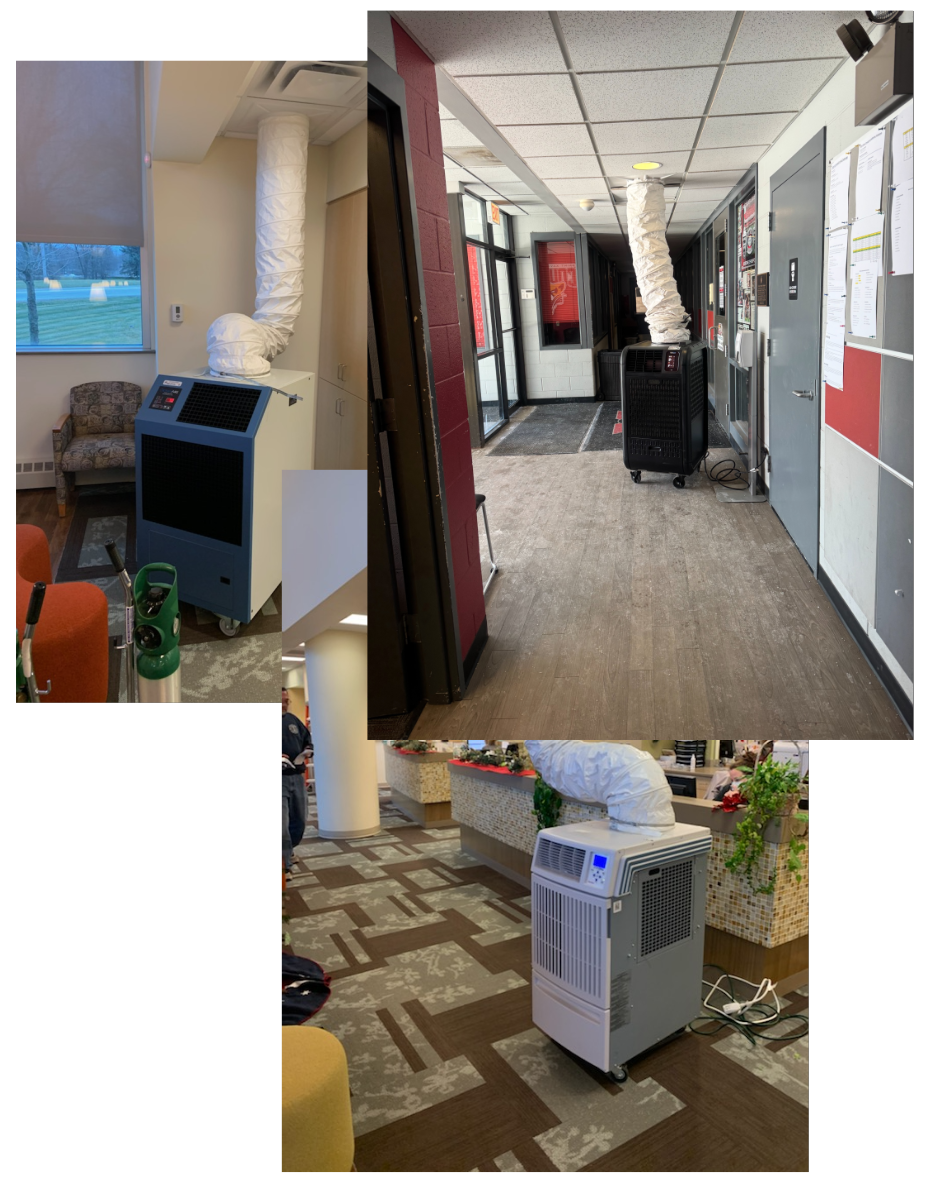
Facility managers and commercial property owners know the struggle: maintaining a comfortable temperature across a sprawling building is rarely simple. Whether you are dealing with a sudden central HVAC failure, seasonal temperature swings, or notoriously difficult-to-treat "hot spots" in lobbies and hallways, you need a solution that is fast, effective, and flexible.
Enter the commercial portable heat pump.
As visual evidence from facilities across the country shows, these roll-in units are becoming an indispensable tool for commercial properties. From school corridors to medical waiting rooms and bustling reception areas, portable heat pumps offer a versatile, plug-and-play solution to sudden climate control crises.
Why Portable Heat Pumps?
Unlike traditional space heaters or basic fans, a portable heat pump provides robust, year-round climate control. Because they use refrigeration cycles to move heat rather than just generating it, they can operate as both high-capacity air conditioners in the summer and efficient heaters in the winter.
Here is why commercial properties are increasingly relying on them:
- Immediate Emergency Relief: When a main rooftop unit goes down, business can´t simply stop. Portable heat pumps can be rolled in on their heavy-duty casters and set up in minutes to keep critical areas—like clinics or busy offices—operational and comfortable while repairs are underway.
- Supplemental Climate Control: Often, central HVAC systems struggle to reach areas with high foot traffic, large windows, or drafty entryways. Placing a unit in a lobby or reception area ensures staff and visitors stay comfortable without overworking the main system.
- Targeted Zoning: Need to heat or cool a specific conference room or a hallway temporarily? Portable units allow you to direct conditioned air exactly where it is needed, saving energy compared to adjusting the thermostat for the entire building.
The Secret to Commercial Deployment: Ceiling Plenum Venting
One of the biggest hurdles to temporary heating or cooling is exhaust. You can´t just vent hot or cold exhaust air back into the room you are trying to treat.
The beauty of deploying these units in commercial spaces—such as offices, schools, and hospitals—is the drop ceiling. As you can see in typical commercial setups, these portable units utilize a flexible duct (often called a "ceiling kit") that directs the exhaust air straight up and out of the room.
How it works:
- A standard ceiling tile is temporarily removed or replaced with a specialized exhaust tile.
- The flexible duct from the top of the heat pump is routed directly into the ceiling plenum (the space above the drop ceiling).
- The building´s existing return air system or natural ventilation handles the exhausted air, while the unit blasts fresh, conditioned air into the occupied space below.
This means no drilling through walls, no propping doors open, and no complicated window vents required.
Common Commercial Applications
Based on real-world deployments, here are some of the most common places you will spot these workhorses:
- Healthcare Facilities & Clinics: Maintaining precise temperatures is vital for patient comfort and safety. You will often see these units discreetly placed in waiting rooms or near reception desks.
- Educational Institutions: School hallways, gymnasiums, and large cafeterias can be notoriously difficult to heat and cool evenly. Portable units provide immediate relief during extreme weather weeks.
- Corporate Offices & Server Rooms: From keeping the front desk staff warm in January to ensuring the IT closet doesn´t overheat in July, these units adapt to the building´s varying needs.
A Smart Investment for Facility Management
Having a commercial-grade portable heat pump supplier such as Porta-Air rentals on standby is like having an insurance policy for your building´s climate control. They protect your inventory, keep your employees productive, and ensure your clients and guests remain comfortable, no matter what is happening with the central HVAC or the weather outside.