

 (888) 519-1422
  FREE Spec-Out Request
 Rental Emergency 24/7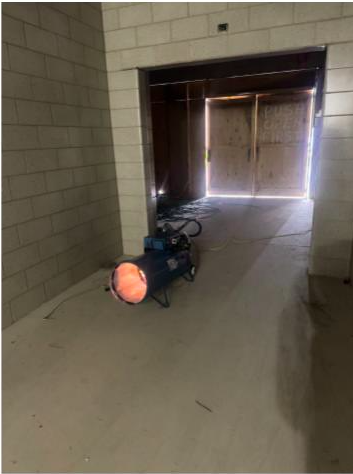
In the rugged world of commercial construction, the schedule is king. But in a city like Joliet, Illinois, where the winds sweep across the plains and temperatures can plummet without warning, the weather often tries to dethrone the timeline. Inside the unfinished corridors of a new development in Joliet, the battle against the elements is being fought—and won—by a simple, roaring blue machine: the Sure Flame direct-fired heater.
As seen in photos from the site, the project is currently in the critical "rough-in" phase. Concrete block walls (CMU) stand bare, floors are poured but unfinished, and temporary plywood doors—spray-painted with the instruction "PUSH OPEN FIRST"—guard the entrances. It is a stark, gray environment that would naturally sit at the ambient outdoor temperature, were it not for the mechanical intervention of temporary heat rentals provided by Porta-Air, Inc.
The Power of Direct Fire
The device pictured is a classic workhorse of the job site: a Sure Flame direct-fired heater. Unlike indirect heaters that use a heat exchanger (venting exhaust outside while blowing clean hot air inside), direct-fired units force air directly through the flame.
This design makes them nearly 100% efficient. Every ounce of fuel burned is converted into heat that is immediately pushed into the workspace. Looking into the barrel of the heater, one can see the bright orange glow of combustion—a reassuring sign for any worker walking in from the bitter cold.
Why Heat Matters: More Than Just Comfort
While keeping the crew comfortable is essential for safety and morale—numb fingers cannot effectively wire an outlet or lay brick—the heater’s role goes far beyond human comfort. It is a tool for material integrity.
For a construction project to move forward in Joliet’s climate, the building must maintain a specific thermal baseline.
- · Concrete and Masonry: If the temperature drops too low, the water in mortar or concrete can freeze before the mixture cures, destroying its structural integrity.
- · Finishing Materials: Drywall joint compound ("mud"), paint, and flooring adhesives are notoriously temperamental. They require consistent warmth to dry and bond properly. A freeze-thaw cycle in an unheated building can ruin days of work, leading to peeling paint and cracking walls.
A Beacon in the Hallway
In the photo, the heater sits alone in a corridor, its power cord snaking across the dusty concrete floor. It is a deceptively simple setup: a fuel source, a fan, and a flame. Yet, this portable unit is effectively the heartbeat of the job site during the colder months.
By pumping massive volumes of warm air through the open doorway and down the block-walled halls, the Sure Flame unit ensures that the humidity stays low and the temperature stays high. It allows the "critical path" of construction to continue uninterrupted, proving that with the right equipment, even a Joliet winter can´t freeze progress.
Choosing the Right Heat: Direct vs. Indirect
For construction managers deciding between heating methods, the choice often comes down to the stage of construction and air quality requirements.
| Feature: | Direct-Fired Heaters (e.g., Sure Flame | Indirect-Fired Heaters |
|---|---|---|
| How it Works | Flame heats the air directly. Exhaust and heat enter the space together. | Flame is contained in a heat exchanger. Only clean hot air enters the space; exhaust is vented out. |
| Efficiency | High (~100%): Every ounce of fuel becomes heat for the room. | Moderate (~80%): Some heat is lost through the exhaust flue. |
| Air Quality | Introduces combustion byproducts (CO, CO2) and moisture into the air. | Delivers clean, dry, breathable air with no fumes. |
| Ventilation | Critical: Requires constant fresh air intake to prevent CO buildup. | Minimal: Can recirculate internal air without risk of poisoning. |
| Best For | "Rough" construction phases, open concrete shells, thawing ground, drying masonry. | "Finishing" phases, tightly sealed rooms, occupied spaces, drying paint/drywall. |
| Cost | Lower rental and fuel costs. | Higher rental and fuel costs. |
Safety First: Operating Direct-Fired Heaters in Enclosed Spaces
While direct-fired heaters are efficient, they introduce carbon monoxide (CO) and moisture into the workspace. Using them in an enclosed area like the Joliet site requires strict adherence to safety protocols to prevent the "silent killer."
The Direct-Fired Safety Checklist:
1. Ventilation & Air Exchange
- · The "Crack" Rule: Never seal the building completely. Ensure there is a fresh air intake (e.g., a cracked window or door) and an exhaust outlet to create cross-ventilation.
- · Ratio Check: For every 100,000 BTUs of heat, provide at least 3–4 square feet of vent opening (check local OSHA/manufacturer codes).
- · Mechanical Assist: In basements or deep interior rooms, use box fans to force air circulation and prevent pockets of "dead air" where CO can accumulate.
2. Carbon Monoxide (CO) Monitoring
- · Personal Monitors: Site supervisors and foremen should wear clip-on 4-gas monitors.
- · Area Alarms: Install portable CO detectors at worker height (breathing zone) in the heated area, not just on the ceiling.
- · Know the Symptoms: Train all crew members to recognize early signs of CO poisoning: headache, dizziness, weakness, and confusion. If one person feels it, evacuate everyone.
3. Fire & Physical Safety
- · The 10-Foot Zone: Keep all combustible materials (canvas tarps, wood, solvents, trash) at least 10 feet away from the heater intake and output.
- · Solid Footing: Place the heater on a level, non-combustible surface (concrete or plywood with a heat shield) to prevent tipping.
- · Fuel Line Integrity: If using propane/gas, leak-check all hose connections with soapy water daily. Ensure lines are tapped down or flagged to prevent tripping and severing the line.
- · Barrier Protection: Erect high-visibility safety barriers or caution tape around the heater to prevent workers or machinery from bumping into the unit.