

 (888) 519-1422
  FREE Spec-Out Request
 Rental Emergency 24/7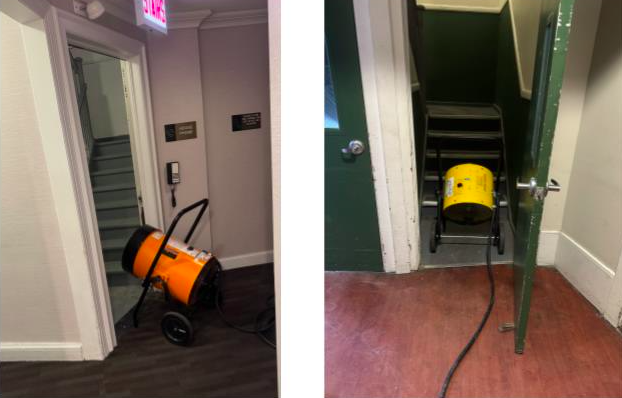
In the winter of 2025, Chicago faced an unprecedented "Deep Freeze," with record-shattering snowfall and sustained sub-zero temperatures driven by the "Blob" weather phenomenon. For high-rise property managers near the Magnificent Mile, these conditions transformed from a seasonal nuisance into a critical engineering challenge: protecting the intricate plumbing of 16-story vertical structures from catastrophic freezing and pipes rupturing.
The Strategy: "Vertical Convection" Heating
When temperatures plummeted, a high-rise building just off North Michigan Avenue deployed a specialized electric heating rental strategy to safeguard its mechanical integrity. High-rise plumbing is particularly vulnerable because pipes often run through unheated "dead zones" like stairwells and service chases.
To combat this, engineers utilized a vertical convection method:
- Ground-Floor Propulsion: Industrial-grade electric forced-air heaters were stationed at the base of the "air case" (the central stairwell or mechanical shaft).
- The Chimney Effect: By blowing high-velocity heated air directly into the stairwell, the team leveraged the building´s natural "stack effect." Because warm air is more buoyant, it naturally rose through the 16-floor shaft, creating a warm-air column that shielded the internal core pipes.
- Supplemental Floor Units: While the central shaft provided the primary heat source, engineers added portable electric heaters to each of the 16 floors. These units were strategically placed near "wet walls"—the sections of the floor where pipes are most exposed to exterior cold—to ensure that localized "cold spots" didn´t lead to burst pipes.
Why Electric Heating?
In emergency winter conditions, electric solutions were chosen for three primary reasons:
- · Zero Emissions: Unlike propane or diesel heaters, electric units produce no carbon monoxide, making them safe for enclosed stairwells and occupied office or residential floors.
- · Precision Control: Modern industrial electric heaters feature built-in thermostats that allow for "set-and-forget" opTrace Heating Cableseration, maintaining a steady level of heat —just enough to prevent freezing without over-consuming power.
- · Rapid Deployment: These units are "plug-and-play," allowing building staff to react quickly as the lake-effect winds intensified.
Key Components of the Freeze Prevention System Key Components of the Freeze Prevention System
| Equipment | Purpose | Placement |
| High-Output Blowers | Propelling heat up the 16-story shaft | Ground floor air case |
| Portable Unit Heaters | Maintaining floor-specific temperatures | Floors 1–16 near exterior walls |
| Trace Heating Cables | Direct contact heating for critical valves | Main water intake and fire pumps |
The successful application of this heating rental plan during the 2025 freeze serves as a blueprint for urban infrastructure resilience. By combining central air distribution with localized supplemental heat, the building avoided the hundreds of thousands of dollars in water damage that typically follow a deep freeze.