

 (888) 519-1422
  FREE Spec-Out Request
 Rental Emergency 24/7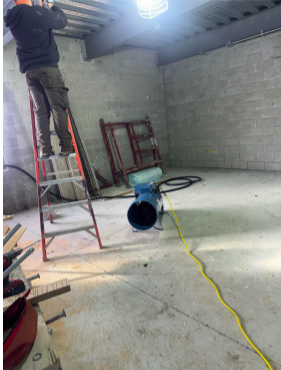
In the Chicago suburbs, the arrival of winter traditionally signaled a slowdown for the construction industry. However, with the pressing need for modern educational facilities in towns like Wheaton, projects such as school additions cannot afford to go dormant for four months out of the year. To keep these critical builds on schedule, contractors are increasingly turning to specialized temporary heating solutions.
Without these systems, construction in an Illinois winter would be virtually impossible. From protecting structural integrity to ensuring worker safety, temporary heat is the engine that keeps Wheaton´s development moving forward.
The Critical Role of Temporary Heat
Temporary heating is not merely a luxury for worker comfort; it is a fundamental requirement for the physical chemistry of a building site.
- · Concrete Curing: Concrete requires a consistent temperature to cure properly; if it freezes before it sets, its structural strength is permanently compromised.
- · Material Integrity: Adhesives, paint, and drywall "mud" have strict temperature windows—usually above 50°F—to bond and dry without cracking or peeling.
- · Pipe Protection: In a new school addition, maintaining a minimum interior temperature is vital to prevent newly installed fire sprinkler and plumbing lines from freezing and bursting.
Direct-Fired Heaters: Power and Efficiency
For large, well-ventilated areas of a school addition—such as open-shell gymnasiums or unfinished cafeterias—direct-fired heaters (often called "salamanders") are a top choice.
| Feature | Direct-Fired Heater Benefit |
| Efficiency | Nearly 100% fuel-to-heat conversion, making them cost-effective for large spaces. |
| Power | Capable of generating massive BTU loads to overcome sub-zero Wheaton winds. |
| Speed | Can raise the temperature of a large "cold shell" in a matter of minutes. |
Safety Note: Because direct-fired units release combustion byproducts like CO2 and moisture into the air, they must only be used in well-ventilated areas with constant fresh air exchange.
The Logistics of a Successful Installation
A temporary heating setup is only as reliable as its infrastructure. For a Wheaton school project, two factors are critical:
- Dedicated Gas Supply: Tying into a reliable natural gas line or a professionally managed propane manifold ensures the heaters run 24/7 without the risk of "flaming out" during a midnight cold snap.
- Dedicated Power Source: While these units burn fuel for heat, they require electricity to run the powerful fans that distribute that heat. A dedicated circuit prevents breakers from tripping, which could lead to a catastrophic freeze-up overnight.
Partnering with Professionals
Whether your project requires direct-fired, indirect-fired (for clean-air interior finishes), or electric heater rentals, the team at Porta Air is ready to help. We specialize in "Sizing-Up" the perfect solution for Wheaton´s unique climate, ensuring your school addition stays warm, dry, and on track for a spring opening.
Don´t let the Chicago winter freeze your progress. From engineering gas ties to providing 24/7 technical support, we are your partners in winter construction.
******To ensure the safety of your crew and the integrity of your Wheaton school project, a daily inspection is not just a best practice—it is often a legal and insurance requirement. Direct-fired heaters (salamanders) are powerful tools, but because they release combustion byproducts directly into the workspace, they require constant vigilance.
Below is a comprehensive Daily Safety Checklist based on OSHA 1926.154 standards for temporary heating devices.
Daily Safety Checklist: Direct-Fired Heaters
1. Placement & Stability
- · Level Ground: Is the heater on a flat, stable, non-combustible surface (concrete or a heat-shielded base)?
- · The 10-Foot Rule: Are combustible materials (tarps, wood, trash, solvents) at least 10 feet away from the heater?
- · Tip-Over Protection: If the unit is in a high-traffic area, is it secured or barricaded to prevent accidental bumping?
2. Ventilation & Air Quality
- · Fresh Air Intake: Are there at least two points of cross-ventilation (e.g., a cracked window and an open door) to prevent oxygen depletion?
- · CO Monitoring: Is a functional, battery-operated Carbon Monoxide (CO) detector present in the immediate work area?
- · Flame Color: Is the flame burning a steady blue? (An orange or yellow flame indicates improper combustion and high CO production).
3. Fuel & Power Supply
- · Gas Lines: Are gas hoses free of cracks, kinks, or signs of wear?
- · Leak Test: Have all connections been checked with a non-corrosive leak-detector solution (soapy water)?
- · Dedicated Power: Is the unit plugged into a dedicated, grounded circuit? (Check that no other heavy tools are sharing the breaker to prevent overnight trips).
- · Cord Path: Are electrical cords protected from vehicle traffic and away from standing water?
4. Operational Safety
- · Safety Controls: Is the "Flame-Out" sensor (thermocouple) functioning correctly?
- · Extinguisher Proximity: Is a fire extinguisher (rated 2A:20B:C or higher) available within 25–50 feet of the unit?
- · Personnel Training: Do all workers on-site know how to shut off the gas supply in an emergency?
How Direct-Fired Heaters Work in Ventilated Spaces
A direct-fired heater works by pulling air across an open flame and blowing it into the space. This makes it highly efficient but means that the quality of the air inside the building depends entirely on the volume of fresh air coming from outside.
Why Calling Porta Air is Your Best Move
Setting up a safe, OSHA-compliant heating system for a school addition in Wheaton requires more than just dropping off equipment. At Porta Air, we handle the heavy lifting:
- · Gas Tie-Ins: Our technicians can safely interface with your building’s natural gas supply.
- · Electrical Sizing: We ensure your dedicated power source can handle the fan load without interruption.
- · Ventilation Consulting: We’ll help you calculate exactly how much "cracked" window space you need to keep your air breathable.