

 (888) 519-1422
  FREE Spec-Out Request
 Rental Emergency 24/7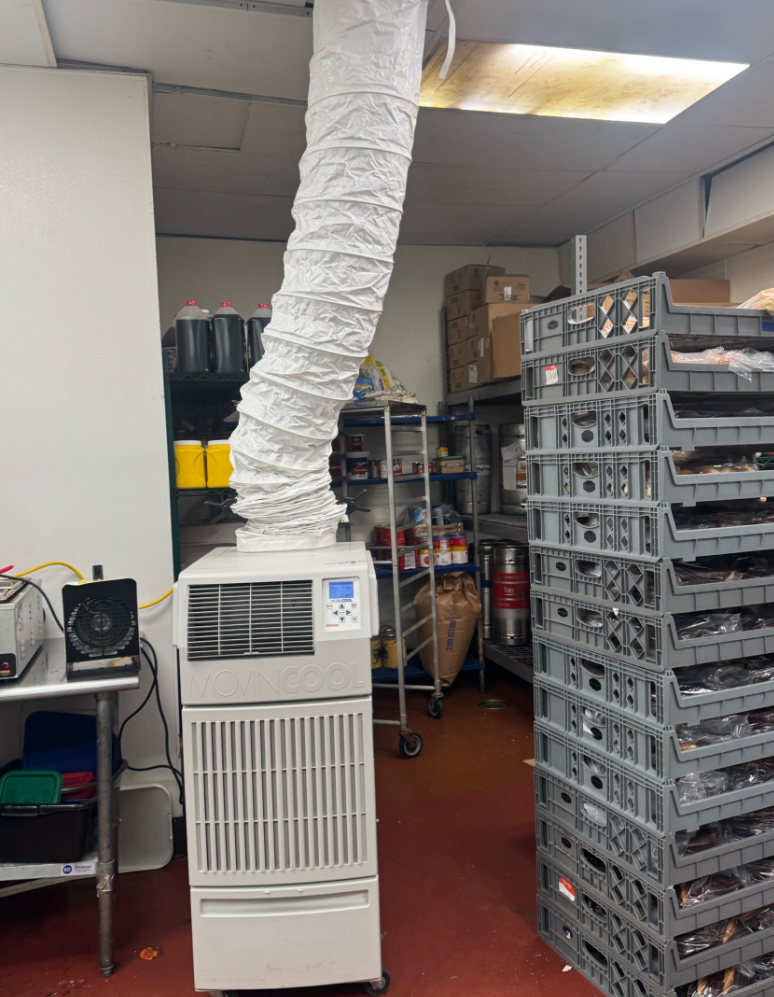
Just steps away from the upscale boutiques and bustling sidewalks of Chicago’s Magnificent Mile, a different kind of hustle happens behind the scenes. In the back rooms, kitchens, and storage areas of River North’s commercial properties, keeping inventory safe and staff comfortable during a punishing Midwest winter is a daily battle.
During the freezing Winter of 2025, many local businesses turned to a highly effective, mobile solution to fight the cold. Pictured above is an unsung hero of the season: a MovinCool Climate Pro heat pump, hard at work bumping up the heat in an employee breakroom.
The Scene: River North, Winter 2025
Chicago winters are notoriously unforgiving, and 2025 was no exception. For commercial properties, especially those in the food service or hospitality industry, maintaining a consistent temperature isn´t just about comfort—it´s about operational survival.
In the provided image, we get a behind-the-scenes look at a busy River North tavern employee breakroom. Flanked by towering racks of fresh bread and commercial shelving, the environment is clearly built for high-volume output. However, back-of-house areas like these—often located near loading docks or in older, drafty sections of a building—can be incredibly difficult to heat using a standard central HVAC system.
MovinCool Climate Pro 18
The unit standing proudly on the red tiled floor is a MovinCool Climate Pro heat pump. While MovinCool is famous for its spot-cooling air conditioners (often used in server rooms and commercial buildings), their heat pump models are lifesavers when the mercury plummets.
Here is why this specific setup is so effective for a Chicago commercial space:
- Targeted Heating: Instead of cranking up the thermostat for the entire building—which wastes energy and overheats the front-of-house—this unit delivers localized, targeted warmth exactly where the staff and temperature-sensitive inventory (like baked goods) need it.
- Plug-and-Play Mobility: Mounted on heavy-duty casters, the unit can be rolled wherever the chill is worst.
- Clever Ventilation: You´ll notice the large, white, flexible duct extending from the top of the unit into the drop ceiling. Because a heat pump works by transferring heat rather than just creating it via resistance, it extracts ambient heat from the air to warm the room, while exhausting the resulting cold air up and out of the space into the ceiling plenum.
Why River North Businesses Rely on Supplemental Heat
The architecture in River North is a beautiful mix of historic warehouses, lofty industrial spaces, and modern builds. But those high ceilings and historic brick walls can be notoriously drafty.
Using a commercial-grade portable heat pump provides several strategic advantages:
- Emergency Backup: If the main boiler struggles on a sub-zero day, operations don´t have to grind to a halt.
- Cost Efficiency: It prevents the need to undergo massive, expensive overhauls of the existing central ductwork just to heat a single problem area.
- Versatility: Once the brutal winter of 2025 thawed into a humid Chicago summer, units like these can simply reverse their cycle to provide powerful spot cooling.
A Testament to Chicago Resilience
Behind every glamorous restaurant storefront on the Mag Mile is a dedicated team working in the back. The sight of this MovinCool unit, quietly humming away while ducting exhaust into the ceiling, is a perfect snapshot of Chicago´s practical, get-it-done attitude. By bumping up the heat right where it matters most, businesses ensure that no matter what the wind chill is off Lake Michigan, the work keeps flowing.